AASHTO T 371-17 PDF Download
Standard EN Sample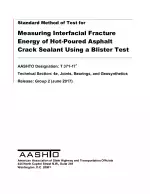
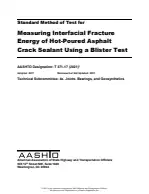
Standard Method of Test for Measuring Interfacial Fracture Energy of Hot-Poured Crack Sealant Using a Blister Test
Also Known As:
AASHTO T 371-17 is a standard method of testing that is used to measure the interfacial fracture energy of hot-poured crack sealant. The test is conducted using a blister test, which involves applying the sealant to a substrate at the specified application temperature. The sealant is then cooled and a blister is created by applying a vacuum to the interface between the sealant and the substrate. The blister is then tested to determine its fracture energy, which provides a measure of the sealant's adhesion and performance.
This standard provides guidelines for conducting the test, including the materials and equipment needed, the preparation of the test specimens, and the test procedure itself. It specifies the required dimensions for the test specimens, as well as the recommended test temperature and duration. Additionally, the standard gives guidance on recording and reporting the test results.
By utilizing AASHTO T 371-17, engineers and technicians in the field of asphalt pavement can evaluate the performance of hot-poured crack sealants and make informed decisions about their selection and application. The test provides valuable information about the sealant's ability to adhere to the substrate and withstand external forces, such as traffic and weathering. This helps ensure the longevity and effectiveness of crack sealant applications, ultimately contributing to the overall durability and safety of asphalt pavements.
| ICS Codes | 93.080 - Road engineering |
| Language(s) | English |
| File Size | 9.7 MB |